What Is Distribution?
Distribution is often referred to as the ‘invisible art’, this is because it is only known to those within the industry – and is barely written about and made aware to the public. It is the most important part of the film process, and it is main job is getting the film to the cinemas and the different avenues of viewing. If a film company such as Working Title has a parent company (in this case Universal), and work as part of a conglomerate so that Universal will help fund the production, and will distribute it when it has been produced. However, an independent film company will only use short term links with certain distributers so that the small independent company can keep the majority of control over the film
Licensing
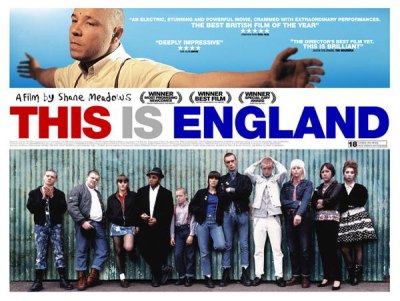
Licensing for a film has to be obtained before any production can begin. Usually it is to obtain the legal rights to create a production of a story (e.g. Harry Potter). However, within the distribution section licensing takes place on two different levels, these are; International distribution, and local distribution. International distribution usually occurs with the major US film companies such as Universal, and DreamWorks etc, and involves them distributing their production on a multinational scale e.g. Avatar. However, Local distribution requires a producer to acquire the rights to distribute a film within one country, usually with small productions such as The Is England.
Following securing the rights to distribute a film, the distributor will also pay royalties to the producer taken from any profits the film makes at its cinemas. They will also create a package for the film to enable them to produce DVD copies, to enable them to maximise their potential profit.
Marketing
Marketing is the process for planning when and how films are to be released. For example, film distributors will find the best time of the year to release a film, e.g. Paramount Pictures chose to release the recent ‘The King’s Speech’ in January – just in time for the BAFTAs, in which it was hugely successful. Film distributors will also try and find the best time of week, this is why many films in England are released on Friday’s – due to the public having more time to go and see it.
Marketing: Prints & Advertising
This section of marketing focuses on two different parts;
The quantity and production of release prints and trailers:
Specialised films will often be released with fewer than 10 prints into key independent cinemas, with these prints subsequently 'toured' over a 6-month period to all parts of the UK. On the other hand, commercial mainstream films will often open on over 200 prints, simultaneously screening in all major UK towns and cities.
Press materials, clips reels, images, press previews, screener tapes:
For the majority of releases, favourable press response is a key factor in developing the profile and desirability of a film. Distributors consider both the quality and breadth of coverage, and this is often inscribed into the nature and scale of a press campaign.
The design and printing of posters and other promotional artwork:
The cinema poster - in the UK this means the standard 30" x 40" 'quad' format - is still the cornerstone of theatrical release campaigns. Numerous recent examples indicate that the poster design is highly effective in 'packaging' the key attributes of a film for potential audiences. Distributors will also consider other poster campaigns, ranging from Underground advertising to billboards.
Advertising campaign - locations, ad size and frequency:
Advertising in magazines, national and local newspapers works in tandem with press editorial coverage to raise awareness of a release. Press advertising campaign for specialised films will judiciously select publications and spaces close to relevant editorial. For mainstream films, scale and high visibility is the key. The cost of print advertising in the UK is comparatively high, and is seen as making distribution in the UK a riskier business than in most other countries. In order to extend the reach of advertising and develop more effective communication with audiences at low cost, distributors are looking increasingly to 'viral marketing' - different forms of electronic word-of-mouth via the internet, email and mobile phones.
Press campaign / contracting a PR agency:
Many independent distributors in particular do not have press departments, and will consequently hire a press agency to run a pre-release campaign. This is especially the case if the distributor brings over key talent for press interviews to support the release.
Arranging visit by talent from the film:
The use of talent - usually the director and/or lead actors - wins significant editorial coverage to support a release. The volume of coverage can far outweigh the cost of talent visits.
Other preview screenings:
A distributor will consider the use of advance public screenings to create word-of-mouth and advance 'buzz' around a film.
Logistics of Distribution
This section is exactly what it says, it is simply the process of distributing the film out to its deferent avenues of viewing, e.g. to cinemas with the film reels, or to shops with DVD copies.
Bullet Boy
Digital Distribution
Towards the end of 2005, the UK distribution and exhibition sectors were starting to move towards digital distribution and exhibition. For exhibitors, digital projection, especially when married to the increasing use digital formats in production, can now replicate - if not surpass - the image quality of conventional 35mm cinema presentation. And, of course, digital sound systems have been used in cinemas for some time.
In distribution terms, the advantages of digital technology are even clearer, though perhaps longer term. Digital technology is seen to offer a more cost effective and logistics-light alternative to the tried and trusted, but unwieldy model of 35mm print distribution described above. It will, eventually, be cheaper and much less stressful to send films as computer files to cinemas across the UK, than to transport 20-25kg tins of film in the back of a van.
Digital distribution and exhibition on a large scale has started to appear in certain parts of the world, notably China and Brazil, where conventional logistics cannot, for one reason or another, efficiently bring together supply and demand. In the UK, digital technology has been embraced by the non-theatrical sector, in film societies and schools, where the use of DVD and mid-range digital projection has replaced 16mm.
The force of this change, coupled with the new capacity of technology to replicate 35mm imaging, has led the UK Film Council to establish a digital distribution and exhibition programme for the theatrical sector at the end of 2005. Entitled the Digital Screen Network (DSN), it will eventually support new facilities in 211 screens across the country (out of a total of just over 3,300 screens in the UK), and is seen as a small but important step change towards full digital cinema.
The DSN will initially work with files transferred from a high definition digital master (either HDD5, or HD Cam). The compressed and encrypted files will be sent directly to cinemas to be downloaded, de-encrypted (unlocked) and opened as files for screening with digital projection equipment. In principle, digital distribution will, in time, change the paradigm of 35mm print logistics. It will be possible for the distributor to send feature film files electronically, via broadband networks, thus eliminating dependence on transportation.
There is little doubt that the advent of digital distribution has the potential radically to alter the modus operandi of distributors around the world. The comparatively low cost of film copies and additional logistical effectiveness of digital distribution provide the distributor with greater flexibility. It will be less expensive in the coming years to offer a wide theatrical opening with many copies, and also conversely, to screen a film for just one performance at any cinema. In theory at least, it will be possible for both distributors and exhibitors to respond more precisely to audience demand.
All this suggests that in the future, more titles, both mainstream and specialised, will receive wide theatrical openings, and that this broadening of access at the point of release will dramatically reduce the overall theatrical period from 3-6 months to perhaps 1-3 months. Thereafter, films will enter into a second-run and repertory programming market aided by lower costs.
The shortened first-run period will in turn bring forward the distributor's release of the DVD. And there's the rub. The adoption of digital technologies offers greater opportunities for distributors to create joined-up campaigns for theatrical and DVD releases, in which, increasingly, the theatrical opening is used as a way of providing a loss-leading marketing platform for the highly lucrative DVD leg.